Monday, December 20, 2010

Should You Really Forgive Everyone?


This morning, I received a letter from a reader who had experienced both physical and sexual abuse from her parents while growing up. She was eventually placed in foster care, and then as an adult, made every effort toward reconciliation with her parents. She spent time with them and tried to be loving toward them. Rather than the healing she had hoped for, she found that all of her encounters with her parents left her feeling miserable, and so at the suggestion of her therapist, she finally stopped her visits to them. She wrote to me wondering if she needed to be in contact with her parents in order to forgive them, and asked how she could tell if she had, in fact, completely forgiven them.

Her questions really are about just how far forgiveness should extend, and the key, I think, lies in understanding that forgiving does not equal allowing. Many of us think that forgiving means opening all the doors to our hearts and our lives and welcoming the person we were angry at back in.  But in fact, doing that may subject you to dangers that you can’t handle. The danger may be physical, or it may be emotional, or even psychic. To continue the relationship may mean allowing yourself to be undermined and enervated to the point where you have no energy or love to give to anyone else. It would be wonderful to be able to be strong enough to be in the presence of those who have been abusive to you and to remain centered and loving, but you need to be realistic about where you are actually at and what you are capable of—and what is healthy for you.

 Here’s what I wrote to the woman who contacted me:

Forgiving does NOT necessarily mean continuing to have relationship with people who have abused you. To forgive means letting go of anger and blame, accepting that the perpetrator did the absolute best he or she could at that time. It means wishing that person well, inwardly asking the Creator to heal that person. Along with that goes the realization that the person may not heal, may not change, and putting yourself in the path of that person may not be wise.

To forgive also may mean allowing the sadness that comes when you accept fully the reality that deep pain was inflicted on you by that person, and that there's nothing you can do about it except embrace that truth calmly and in faith. It's coming to peace with that sadness, and holding it inside of you like a child in need of love. In a funny way, accepting the sadness contains it, so that you can make room inside for other things, including joy. Coming to terms with the sadness and the imperfection of the other allows you to give up the notion that you can somehow "fix" the situation or "fix" the person who hurt you--you can't. You never will. That is in the hands of the Creator. Understanding this fully is what will give you the strength to both hold that person in love and keep your distance when that is the wise thing to do.

Forgiveness never should involve taking on more pain than you already have experienced. Instead, forgiveness should allow you to feel the beauty and purity of your own heart. Every day, you can inwardly offer the person who hurt you a prayer for healing, and inwardly offer them your blessings and goodwill. At the same time, you can pray for your own illumination, protection, peace, and wisdom. Another thing you can try is to give yourself a TAT session, which is one of the best methods I have found for experiencing wise forgiveness. I have used it both on myself and with many clients successfully. To try it on yourself, go to www.tatlife.com and download the free booklet, or contact me for help.

Monday, December 13, 2010

Use Music to Heal Yourself: Four Techniques

Since the cradle of civilization, people have used music to heal. In the Bible, David healed Saul through harp music. Krishna healed with his flute, and the ancient Hawaiians used song and chant in healing. The god Apollo oversaw both medicine and music in ancient Greece.

In modern times, though, it comes as a surprise to many just how powerful music and sound is in healing both mental and physical distress. Studies show that music helps stroke victims to heal faster, premature babies to stabilize quicker, and terminally ill patients to experience less pain. Lactating mothers who listen to music produce more milk (one study found a 63% boost from listening to music). Music can help hypertensive patients to reduce blood pressure, Alzheimer’s victims to sleep better, victims of Parkinson’s disease and brain injury to recover cognitive and language function far more completely. Plus, it enhances the immune system and even improves strength and balance.

Years ago, I knew a schizophrenic woman who had been through years of treatment with anti-psychotic medications and psychotherapy, with little improvement. Then she started listening to classical music for several hours each day, and she completely healed herself in that way. Most of us do realize that the right music soothes and heals the soul, but few of us know how to harness the full power of music to heal ourselves or to enhance consciousness.

The cool thing is that you can use music and sound right away to help yourself. If you want to improve your consciousness, try one of these things. For even better results, do one of these things every day for a month:

  1. Play inspiring, uplifting music while you write in your journal. Choosing the right music is essential. Selections like Pachelbel’s Cannon, Bach’s Brandenburg Concertos, and Handel’s Water Music work particularly well, but if classical music doesn’t appeal to you, try whatever you love, depending on your taste. You’ll find a nice selection of music intentionally written for healing on the internet. You’ll know it’s the right music if you feel palpably better afterwards.

  1. Now, do the same thing, but this time, do it with a partner. While the music plays, relate any thoughts, images, or stories that arise to your partner, while your partner acts as scribe. The power of this exercise may surprise you.

  1. Breathe in healing music for 20 minutes. Remove every other thought and distraction from your field of consciousness. Just listen to the music and breathe it into yourself. If you prefer, you can imagine breathing the music into each of your chakras in turn…first breathe into the center at the base of your spine for a few minutes, then into your sacral area, then your solar plexus, then your heart, your throat, your third eye, right up to the crown of your head.

  1. If you enjoy chanting, buy, download, or rent from your library kirtan or bhajan chants and sing along for half an hour. Or, just tune in on the internet (check here). You’ll undoubtedly experience a lift and clearing.

Monday, December 6, 2010

People Pleasing: Wanting Everyone to Like You

Winston Churchill once said, “You have enemies? Good. That means that you stood up for something, sometime in your life.”

The great leaders in history, it seems, have been adept at going forward in spite of having political enemies. They willingly speak their minds and stand up for what they believe even when others get alienated. But most of us limit just how much we speak out. We’ve learned “pleasing behaviors” at a young age so that other people will like us. We smile even when we aren’t happy. We learn to keep our mouths shut when our opinions differ sharply from those of the popular people in our crowd, or when our first attempt at voicing our views meets with anger. We learn to monitor how others receive our comments or behavior, and then we adjust accordingly.

And that’s because it hurts so very much to be ostracized from the group, to be rejected. A study just published in the journal Psychological Science reported that social rejection actually affects the heart. When subjects were told that others didn’t like them, their heart rates plummeted. In other words, the body seems to carry programming which influences it to try to fit in with the herd, and when that isn’t happening, the body goes into shock mode.

Yet some people manage to move outside the herd. They say their truth and either don’t care how others react, or are willing to live with the consequences. Maybe they feel popular enough with the few supporters they do have to risk rejection by the masses, or maybe truth matters more to them than popularity. In any event, they have embraced what I’ll call “elective unpopularity.” They have alienated others based on choices they’ve made—by joining certain groups, or wearing their hair too long or too short, or by espousing unpopular views--and could probably win those same others back by making other choices.

But then there’s “non-elective rejection,” and that’s where the pain of rejection stings the most. That’s when others just don’t like you because you happen to be you. They don’t like your personality, your being, your presence. Maybe you did something bogus in the past and they can’t and won’t forgive you. Maybe they don’t like how you look or talk or smile or think. Maybe they don’t like the fact that you like someone they don’t like, that you hang out with Joan instead of Joanna, that you defended someone they were angry with, that you (God forbid!) once set a limit, said “No,” or got annoyed with them. Try as you do, you can’t get these people to accept or forgive or understand you. Even those who handle elective unpopularity just fine can find this non-elective rejection intolerable. While you might be fine with the idea that some people reject you because your politics or religion or other group identifications, you might find personal rejection intolerable.

And yet, tolerate it you must, because it’s nearly impossible to make everyone like you. If you make an attempt at it, you’ll exhaust yourself, but that’s just what lots of us do—exhaust ourselves trying to please others. We go into a near frenzy trying to please our detractors in order to turn them around, and we may not even know we’re doing it because our “pleasing behavior” is so automatic—smiling and yessing and staying silent when we have important things to say and doing things for other people instead of caring for ourselves--trying, trying to keep everybody in our fan club.

Of course, to some degree, all of these behaviors are essential in order for us to have a civilized society. I personally don’t think there’s anything morally wrong with stifling yourself to fit in—it’s what your biological nature tells you to do—but the question becomes at what cost do you try to make others like you? No matter what you do, there will always be those who just won’t bite your bait; there will always be those who won’t forgive or accept or love you. And the harder you try to win them all over, the less of yourself will be left for you to love, the less of you there will be to contribute your little authentic piece to the world tapestry.

The bottom line, I think, is that we all need to learn how to live comfortably with the fact that some people just plain don’t and won’t like us-- if we are to retain any integrity. And, we need to know what to do with the sting of rejection should we encounter it, where to put it, how to nurse the ache. Nothing in life prepares us for it. There are no courses in school that teach, systematically, how to be yourself even if it means surviving unpopularity. There are no fail-proof manuals that point out places to store pain and hurt so that we can forge ahead in spite of those feelings. There are no perfect instructions about how to stand up in a crowd that disagrees with you and speak your mind without fear of humiliation or ostracism.

But there are people to look to for inspiration—public figures who have risked all to say the truth; or closer to home, individuals who consistently try to be honest and transparent with us, even at some risk. If you want to stop mindlessly “people pleasing,” you might begin by assembling a support team. First notice who invites you to be yourself and to say what you feel and believe, versus who tries to shut you up. Who, when you have a difference of opinion, has the courage and integrity to work it through with you and listen to your point of view? Who encourages you to speak the truth as you see it? Those who embrace honesty and open communication you can celebrate as true friends—your support team; those who shut it down you can mourn.

And should you encounter rejection, or if you’re living with the hurt of rejection now, ask those on your support team for help. Ask them how they handle such things. Ask them to keep you honest, in spite of the hurt. If you need additional help, you can use techniques that reduce fear and hurt and anxiety—things like meditation and EFT and TAT—to stay on course.

Monday, November 29, 2010

The Virtue in Just Giving Up

One of my former teachers was a big fan of the idea of never giving up. No matter the challenge, no matter the odds, he said that we should just keep trying, because “there is nothing in this entire world that is irrevocably unchangeable.” It’s an incredibly inspiring philosophy, this belief that with enough effort and determination, any goal can be reached. For many years I lived by this credo, and because of it, I achieved many things that otherwise I never would have dreamed of.

But the other day as I stood in the shower, I had a mini-epiphany of a different ilk. I had been worrying about whether a friend of mine was annoyed with me. He had been acting withdrawn, and I was trying to figure out whether I had done anything to irritate him, or if I could do anything to make him feel better. Suddenly, I had a flash of all the times in my life I had experienced similar worries. I saw a long line of anxieties and concern of a similar nature extending back years and years.

And then I saw a million other anxieties that I had carried at various times in my life. In my mind’s eye, I perceived an endless line of concerns that I had been trying to correct or control through changing myself or modifying circumstances. I had been trying to change all those things so there would be nothing to worry about, so that everything would be good and right and virtuous. But then, in that moment, I saw that the universe has a life of its own and no matter how much I tried, the flow of the universe would continue in it’s own way, carrying me with it. Right there in the shower, I said aloud, “I give up.”

When I said, “I give up,” I meant that I would stop fighting to patch things up, to correct reality. It was as if my entire being made a choice at that moment to completely and absolutely accept what is. I was accepting the intelligence of the universe, feeling that it was perfect, even in its imperfection. I was accepting myself, accepting that my basic nature was gifted to me at birth, and while I can strive to be the best me I can be, I’m always going to be me. Being me may involve some blunders, some clumsiness, some bad choices and even bad actions, but I realized I’m better off accepting that I’m imperfect me than desperately trying to be someone better and constantly failing. Better to just accept everything inside and outside than to constantly be in “fix-it” mode, because trying to fix things takes too much energy, and we have limited time here and limited energy with which to live our lives. Even if others don’t like me as I am, the universe seems to accept me completely, as it hasn’t booted me out of existence yet, and that’s a wonderful thing.

I felt such a relief, as if I could breathe deeply from the soles of my feet to the top of my head. I was no longer fighting anything. I was no longer trying to hold back the dam. I was surrendering to the river of life, and it felt exhilarating, wonderful, liberating. So much of my life energy was being zapped right out of me with worries and the feeling that I needed to improve, but when I gave up, that energy was restored.

I’m NOT saying here that it’s okay to let cruelty and injustice run wild on the planet or to act with disregard for others or to just live with terrible dysfunction. I’m also not saying we should be happy with intolerable circumstances. Rather, I’m saying we can surrender to those circumstances inwardly, so that we can then find a new calm and inner peace that allows us to make choices for change, if need be. Attacking problems head-on sometimes just creates more problems and causes so much inner strife. But accepting that you have this problem in your life, trusting that the universe has given you this problem as part of its perfection, gives you your dignity and faith back, and the clarity and serenity with which to choose a course of action.

I do think there’s a place for the “Never give up” credo, for consciously trying to bring harmony and beauty to the world and to our own psyches, but I think surrender has to come first. I have a feeling that until we really surrender to how things are and how we are, with our eyes wide open, not pretending to be better than we are, nothing will really change. Until we accept what is, until we stop fighting reality, how can we change it? Only by embracing reality do we have any power over it, and the power that we gain by surrendering is the power of love. What greater power can there be?

Monday, November 22, 2010

Studies Show Gratitude Enhances Health

 The arrival of Thanksgiving in a few days pinches us to remember that no matter how difficult life may be, we have so much to be grateful for. True—this has been a challenging year for many people—with the economy in dire straits and the ever-increasing pace of existence. But still, most of us have decent shelter, food to eat, a friend or two, and the ability to see beauty and hear music. In fact, most of us have a lot more than that.

Several studies out of UC Davis have found that those who practice gratitude daily experience significant boosts in well-being. In one study, the researchers found that subjects who were asked to write down five things they were grateful for every day scored a 25 percent increase in happiness and optimism. The grateful subjects also exercised an hour-and-a-half more daily, compared to subjects who were asked to write down five hassles every day.

Other studies have found that cardiac patients practicing gratitude had fewer heart attacks, and grateful polio victims slept better. Dr. Lisa Aspinwall at the University of Utah found that subjects asked to practice gratitude maintained higher levels of red blood cells that protect the immune system.

It is a simple practice, to write down your daily five on a gratitude list. Merely thinking of five things doesn’t have quite the power of committing those things to paper and reading the list aloud. If you consider yourself at all a spiritual being, this would seem to be a foundational endeavor—something to do first thing in the morning and last thing at night. Gratitude is a prayer, an offering, an affirmation, and a celebration all rolled into one. That we can feel grateful at all is a gift in itself, a thing of such great beauty and healing light, a miracle.

Here’s my gratitude list for this morning: I am grateful for waking up in one of the most beautiful places on earth, for the gentle breezes and moist morning air, for the roosters crowing in the yard, for being able to write about what moves my soul, for my sweet dog sleeping on the couch, for the deep friendship and support of my life partner, and for being able to share the healing practice of TAT. There’s so much more—but these are the first seven that popped into my brain. Limiting it to five didn’t work this morning. Please feel free to share your gratitude lists here! Let’s inspire each other!
 

Wednesday, November 17, 2010

The Call Refused (Your Own Hero's Journey)

In the hero’s journey model, the hero (you) starts out in his or her normal life, and then something happens that offers an opportunity for change. It may be an outer event (a relationship starts or ends, schooling begins, illness happens), or something inner (you get disillusioned and restless, or become curious to try something new). This opportunity for change is known as “the call to adventure”-- whether that “adventure” is something you sought after or something that was thrust upon you (getting fired, for instance, or having your spouse leave you).  Sometimes change clobbers you on the head, whether you seek it or not.

We can see the call to adventure exemplified in so many movies and books. In the film Avatar, marine Jake Sully gets the call to adventure when summoned to Pandora for a mission. In The Wizard of Oz, the tornado sweeps Dorothy into her adventure. And in Good Will Hunting, Will’s adventure launches when he’s caught solving the math puzzle.

But the call to adventure doesn’t just happen in movies. It also happens in our lives, over and over. Sometimes we may enthusiastically follow the call—sometimes too enthusiastically, in fact, taking on more than we’re ready for. But at other times, and more typically, we resist the call because we fear change. This phenomenon is known as “the call refused”—when the hero (you), tries to keep life as it has been, whether that’s possible or not.

Undoubtedly, you have been called to adventure many times, although you may not have framed events in quite that light. How many of those calls have you followed? When in your life have you refused that call? What opportunities have you let slip by? What did you begin but never finish? What people did you let get away from you, with whom maybe you could have had meaningful relationship? What inner urgings are you ignoring now? What outer changes are you resisting instead of embracing?

I’d like to invite you to take 15 minutes right now to write about how you’ve resisted the call in your own life, and with what consequence. It may help to spend five minutes brainstorming first, just listing the times you’ve refused the call. Chances are something surprising will pop up for you. Then, start writing.

At the least, the exercise will help you to remember that you can reframe everything that happens in your life as part of your heroic journey, and to acknowledge that everything offers opportunities for learning and transformation. Please let me know how it works for you!


Tuesday, November 9, 2010

Why You Can't Recapture Past Bliss

When I was 19 or 20, I had an experience that turned everything I had known until that point on its head. I was camping out at a remote lake in Canada. My mind was clear and my heart calm. As I gazed out over the lake, I suddenly “saw” all the ripples on the surface of the lake merge together as the lake started laughing. And then, time stopped. I knew in that moment the meaning of eternity. I understood what time was, and wasn’t. I knew why I was on earth and I knew my place in the flow of life. I know this sounds very cosmic and perhaps even delusional, but it really did happen. The effects of the experience lasted for several weeks, but gradually, I returned to my normal consciousness.

After that experience, I wanted little more than to have another experience just like that one.  But alas, no matter what I did, I could not make the universe expand again. I took up meditating, I prayed, I joined a spiritual group and dedicated myself heart and soul to the quest for over 20 years, and even though I had some wonderful experiences, never again did time stop for me; never again did I feel as clear and connected to divinity as I did at that moment. I continually prayed for another 10 seconds of such divine bliss.

And then, a few weeks ago, a friend named Jeffrey Courson said something that made so much sense that I had to write about it. He said that after spending years trying to recapture a peak experience that he had gone through, he finally realized that life never repeats itself. Just as no two snowflakes are identical, neither are any two experiences in life, and nothing will ever happen again in exactly the same way it did the first time. In other words, those early amazing experiences will NEVER recur. Instead, they lay a foundation upon which something new can grow.

And of course, this is 1000 percent true. It’s true not only for spiritual experience, but for everything. You can’t ever re-experience love in exactly the same way as you did in the past, nor creativity, nor success. It’s futile to pine for another peak experience like the one from the past, because it’s impossible that it will ever come round again. What will come around is something with more shading, more complexity, more depth—because it will be layered on top of whatever you experienced before.

In fact, holding onto the idea that you need to recapture anything actually shuts down your energy systems. You wear lenses tuned only to the frequency of what you already know, instead of remaining absolutely open to something new. If you let go of the thought, “someday I’ll find that bliss again,” you’ll notice a feeling of spaciousness inside, a feeling of relief, a feeling that you are allowing the universe to flow through you again in its own way.

Every breath carries a new promise, completely different from any breath that came before it. We humans constantly try to shape life into a solid form that will comply to our hopes and bestow upon us what we want, but the river of life can’t be stopped, shaped, or made to flow backwards. What came before has long since gone down river. Perhaps wisdom lies in surrendering to that river with open eyes, open ears, open arms, an open heart, and a life filled with gratitude for being able to take the ride, come what may.

Many Blessings,
Hiyaguha

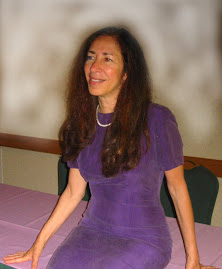
Dr. Hiyaguha Cohen offers life coaching by Skype or phone and in-person Hawaii counseling. Click HERE to go to her website.